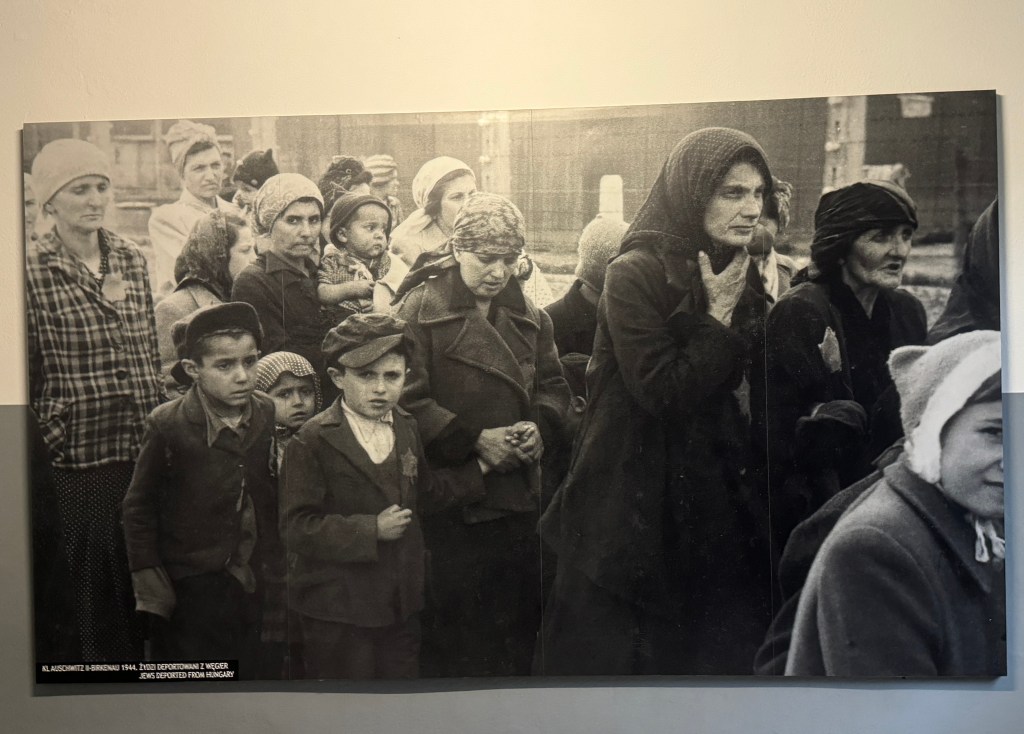
I visited the concentration/extermination camps at Auschwitz-Birkenau at the weekend. Writing about this visit alongside the principles of yoga initially made me uneasy. The Holocaust – the systematic, extermination of the jews – and the practice of yoga, which often emphasises ‘letting go’ and inner peace – Am I trying too hard to forge links? How could I even begin to connect these two realms without diminishing the weight of such a tragedy? And should I even try?
I haven’t really stopped thinking about it since and think I’ve found a way to explore these ideas respectfully—not by equating the Holocaust with the personal challenges we encounter in yoga practice, but by focusing on the importance of bearing witness. In yoga, we often practice being present with what is uncomfortable, sitting with pain and difficulty rather than turning away. This principle—of acknowledging and holding space for suffering—felt profoundly relevant as I stood in this place of overwhelming grief and horror in a world where people are still suffering.
Bearing Witness Instead of Letting Go
Auschwitz confronts you with a visceral truth about humanity’s potential for cruelty. The infamous “Arbeit Macht Frei” gate, which I’ve seen many times in books and films, struck me with a deeper horror standing beneath it. The cruel irony—that “work” here only made people “free” through death—reveals the cynicsm of the Nazi regime. Only 10 percent of those who arrived at Auschwitz were not sent directly to the gas chambers. Those deemed “fit” laboured under brutal conditions, their average lifespan measured in months, not years.
In yoga, letting go usually implies releasing what no longer serves us—resentment, pain, attachments that weigh us down. But as I walked through Auschwitz, I realised that this was a place where “letting go” didn’t apply in the same way. Here, remembrance is essential. Holding on to these memories, as uncomfortable and harrowing as they are, is a kind of moral duty. Primo Levi’s words echo here, reminding us, “It happened, therefore it can happen again:.” To bear witness to Auschwitz is to acknowledge not just the suffering of those who perished but also our shared responsibility to ensure that such atrocities are never repeated.
Navigating the Tension Between Presence in the Moment and Remembrance
In yoga, we often focus on the power of being present—living in the now, releasing attachments to the past and worries about the future. The practice encourages us to let go of what no longer serves us, so we can find peace and freedom in the present moment. But when we stand in a place like Auschwitz, a place steeped in profound suffering, letting go doesn’t feel like the appropriate response. Instead, remembrance becomes a form of presence—a way of engaging with the past that deepens our connection to the present. It’s not about being stuck in the pain or trauma of history but about honouring the memory of those who suffered and using that memory as a guide to inform our actions today. This kind of presence—one that acknowledges both the weight of suffering and the possibility of compassion—becomes a call to live mindfully, with purpose and empathy.
Honouring ‘The Righteous Among the Nations’
In a place so marked by darkness, there are also stories of light—those of the “Righteous Among the Nations,” non-Jewish individuals who risked their lives to save Jews during the Holocaust. People like Oskar Schindler, who spent his fortune and risked his life to protect Jewish workers, represent the best of humanity. Honoured at Yad Vashem, Israel’s memorial to Holocaust victims, Schindler’s story is a reminder that, even in times of extreme suffering, compassion and courage persist. His legacy, along with that of thousands of other “Righteous” individuals, demonstrates how a commitment to empathy and action can bring hope even amid unimaginable cruelty.
Recognising these stories of courage alongside the horror of Auschwitz is not about “letting go” of the pain or guilt we may feel as witnesses. Rather, it is a call to carry these memories forward with purpose. To honour the past means we must engage with it actively, with a mindfulness and responsibility that is deeply in line with yogic principles.
Balancing Remembrance and Compassionate Action
In yoga, we often encounter a duality—finding peace within while also recognising our connection to the wider world. The act of bearing witness allows us to hold space for history without being consumed by it. It teaches us to honour suffering without allowing it to immobilise us. This practice of mindful remembrance, rather than avoidance, calls us to live with compassionate action and to work toward a world where such atrocities are never repeated.
As I reflect on my visit to Auschwitz, I’m reminded that the principles of yoga extend beyond our mats and into the way we engage with history and humanity. We remember not to be weighed down by the past, but to be motivated by it. In honouring the memory of those who suffered, and those who stood against that suffering, we recommit ourselves to living with compassion, courage, and a dedication to peace.
If you’ve ever wondered if you should visit Auschwitz – the answer is a definite yes.



 Yoga Pathways
Leave a comment