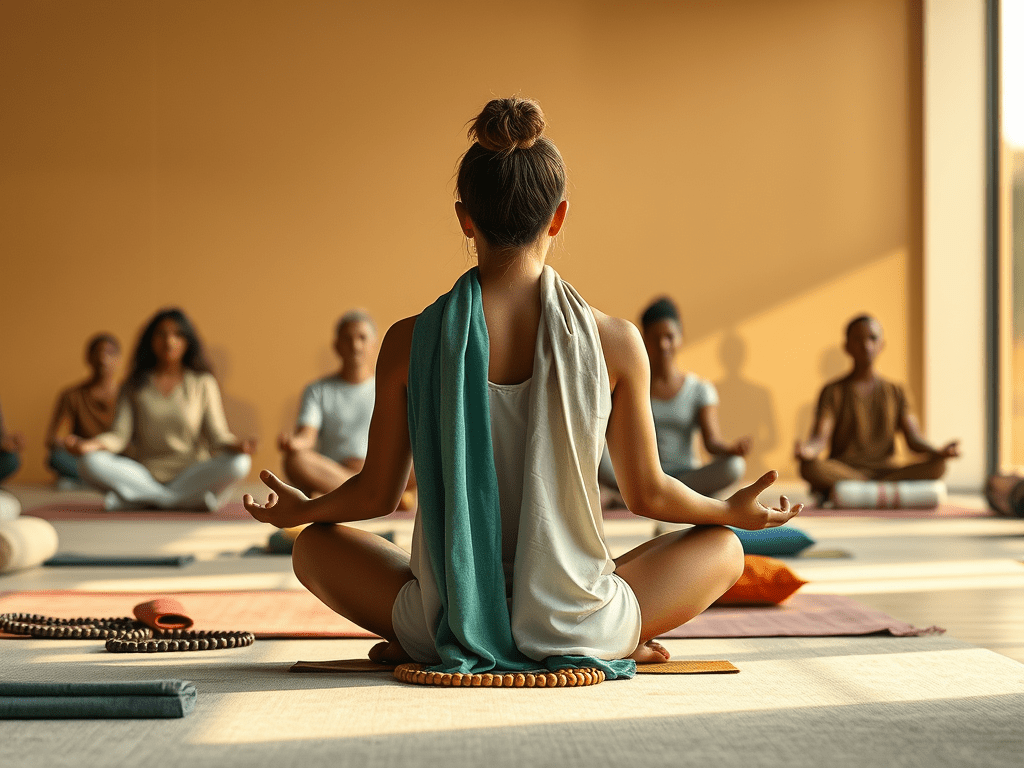
Obviously, I was excited about starting my meditation teacher training, I’m always excited about learning new things, but it has surpassed all expectations. I knew it would help me to deepen my practice and that I would gain new insights, but I hadn’t anticipated just how much it would challenge and inspire me. From unexpected discoveries about different meditation styles to the mind-blowing science behind it all, this journey has been so much richer than I imagined
Falling for the Science
I’ve always been interested in the benefits of meditation—I can feel them in my life—but Ithe science behind it – not remotely. In fact, I was particularly dreading having to write the science essay! But learning about neuroplasticity, EEG scans, brainwaves, and how meditation physically reshapes the brain has completely blown my mind. Knowing that specific meditation techniques can strengthen particular brain regions has made me want to integrate them more intentionally into my own practice.
Did you know that regular meditation increases activity in the left prefrontal cortex—the area of the brain associated with happiness? Studies have shown that long-term meditators tend to have more positive emotions and resilience. So meditation doesn’t just make you feel calmer—it actually rewires your brain for happiness.
Challenging My Preconceptions
We studied ten different types of meditation on this course. Going in, I thought I knew what I liked and what I didn’t. That turned out to be mostly true—when in doubt, the default meditation of choice is breath. I can usually bring myself into line with a bit of conscious breathing. I’ve also always loved loving-kindness meditation and visualisation.
But the biggest surprise? My absolute favourite meditation so far has been chanting. I couldn’t have called that! It was the one that I had been most scared of. And the one I’ve struggled with the most—despite it being considered one of the simplest—has been Zen. It turns out that what seems easy on the surface can be the most challenging in practice.
The Power of Community
I know people complain about being in too many WhatsApp groups, but I love ours. When conversations become too intrusive or don’t interest me, I just mute the notifications. But having a space where we can check in, clarify things, and see how others approach their practice and the homework has been invaluable. Meditation is such a personal journey, yet there’s something powerful about knowing you’re not doing it alone. The collective energy of a group, all working towards the same thing, has been super helpful.
Keeping a Meditation Journal
One of our assignments has been keeping a daily meditation journal. Meditating every day isn’t new for me, but making sure it’s at least 20 minutes and then writing about it is. The real value of this exercise has been how much it’s made me experiment. I’ve tried meditating at different times of day, alternating between guided and unguided practices, and making sure I work through all ten types of meditation.
This has led to so many discoveries. I’ve noticed how my mind responds differently depending on the time of day. I’ve realised that sometimes I resist the very practice I need the most. I’ve also learned that switching things up stops my practice from becoming stagnant—sometimes, I pay better attention when I do something a little bit differently.
Final Thoughts
This training has already changed the way I think about meditation. I’ve realised I’m much further along on this journey than I’ve given myself credit for (but still scratching the surface – enlightenment probably not round the corner) I’ve also discovered that there’s always more to learn, whether it’s through science, experimenting with different techniques, or simply sharing the experience with others.
Who knows what else will unfold as the training continues? But if the first part of the journey is anything to go by, it’s going to be fascinating.


 Yoga Pathways
Leave a comment