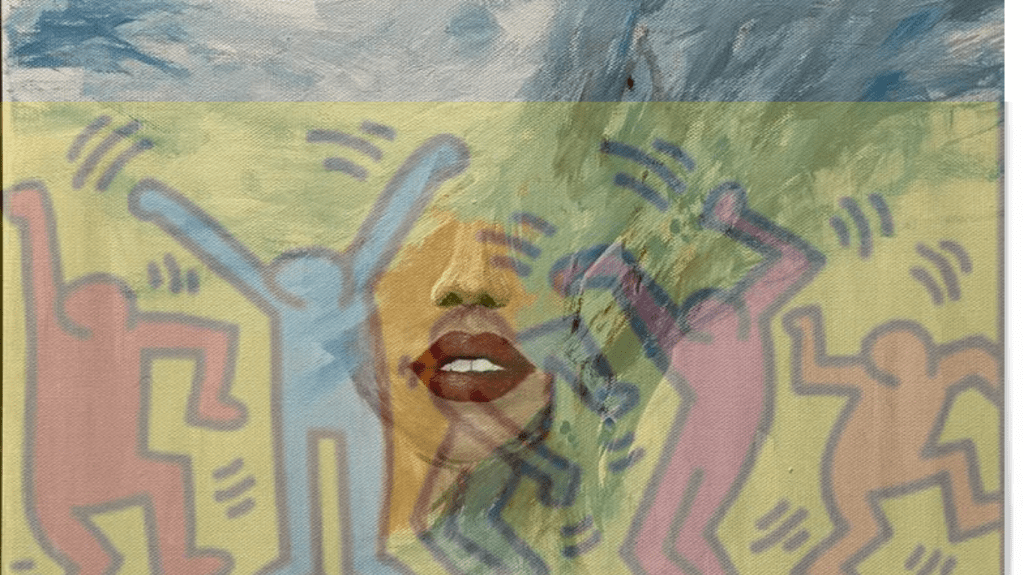
Life has a way of keeping us on our toes – one night we’re dancing, the next we’re drowning. This week, more than ever I am reminded that the real practice of yoga isn’t just on the mat, but in how we meet these wild swings with compassion and presence.
On Friday, I threw myself a birthday party. It was fabulous—there was dancing, laughter, and so much love. The kind of joy that fizzes up from the soul and spills into the room. Being surrounded by so many special people filled me with a love and joy that was almost too much to contain—like a bottle of champagne shaken and suddenly uncorked, bubbling over and filling the whole room with its effervescence. Friends gathered, stories were shared, connections deepened, and I floated to bed that night with my heart full and my face aching from smiling.
And then came Saturday.
Less than 24 hours after basking in all that light, my daughter spiralled into a full-blown psychotic episode. It seemed to come on quite quickly. So Saturday came with an abrupt drop—like the floor fell out from under us and we were both freefalling.
We’ve all had weekends—or even single days—where life turns on a dime. The yogis would say this is life doing what life does: serving up rāga and dveṣa in one seamless weekend. Rāga means attachment to pleasure, while dveṣa is aversion to pain. Both are seen as roots of suffering, according to Patanjali’s Yoga Sutras. One moment, I wanted to cling to time, freeze-frame the party forever. The next, I wanted to run screaming from reality.
Both reactions, according to yogic philosophy, are understandable—and both are a trap.
In The Yoga Sutras, Patanjali names rāga (attachment) and dveṣa (aversion) as two of the five kleshas—those sneaky roots of suffering that tangle up our experience and keep us in a cycle of discontent. We grasp what feels good and push away what doesn’t. And in doing so, we lose our footing in what is.
I didn’t want to let go of the joy I felt on my birthday. It felt like a hard-earned, sun-drenched blessing. But clinging to it didn’t help when Saturday came. Nor did resisting Saturday’s heartbreak make it disappear.
What I’m learning—again—is that freedom doesn’t come from controlling life’s ups and downs, but from softening our grip on both.
This doesn’t mean we become cold or detached. On the contrary. We feel everything. We love deeply. We cry ugly tears in the kitchen while still wearing our glittery birthday earrings. But we learn to ride the waves rather than drown in them.
We practice equanimity—upeksha—not by flattening our emotions but by widening the container that holds them. We let Friday’s joy dance in our cells, knowing it will pass. We let Saturday’s sorrow wash over us, knowing it too is impermanent.
And maybe—just maybe—we laugh a little, too. Because life really is absurd sometimes. One day you’re blowing out candles, the next you’re on the phone with a psychiatric crisis team. Somewhere in that wild swing is the whole messy miracle of being human.
So this is my yoga today. Not headstands or chanting (though those help). Just the raw, radical act of showing up for what is. Of loving without clinging, grieving without resisting, and breathing through it all—one breath at a time.
Practice for the Week:
Notice when you’re clinging to joy or resisting discomfort. Can you soften your grip, even just a little? Try sitting quietly for a few breaths, letting each feeling arise and pass, without holding on or pushing away.
Happy birthday to me. And blessings to all of us who are dancing and drowning, sometimes in the same weekend



 Yoga Pathways
Leave a comment