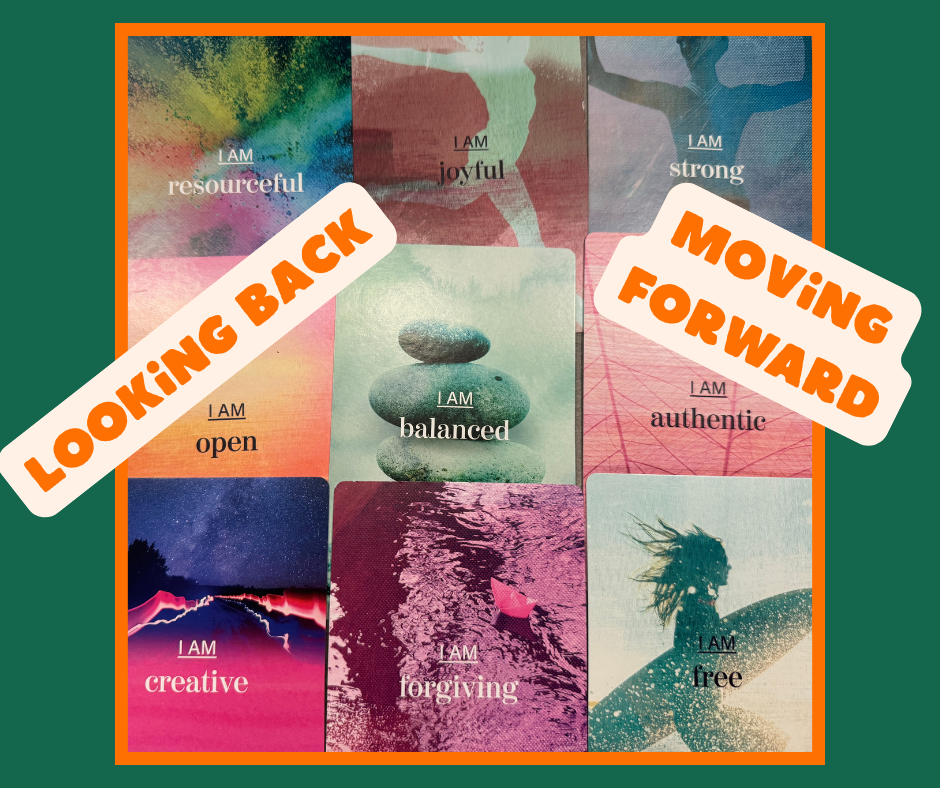
Winter, with its shorter days and quieter energy, always feels like an invitation to turn inward a little. Before the rush of a new year, there’s something grounding about pausing to look back properly at the year just gone—its triumphs, its difficulties, and the intention that quietly sat underneath it all.
Why look back before looking forward
For me, it’s impossible to set a clear “north star” for the year ahead without first understanding the terrain I’ve just walked through. Reflection helps me notice what genuinely lit me up, what drained me, and what supported me spiritually, emotionally, practically, and mentally.
Each winter I sit with a few simple questions: How did my word of the year show up? Where did life surprise me? Where did I grow, and where did I hide? This kind of honest stock‑taking makes my intentions for the coming year feel rooted in reality, not just wishful thinking.
Why a word of the year
I choose a single word for the year because it gives a steady, simple focus that cuts through the noise better than a long list of resolutions. A word becomes a quiet guide I can keep returning to when things are joyful, messy, or painful—something to lean on when I ask, “What would it look like to meet this with my intention?”
This is also where habit and consistency come in. A word of the year helps me come back, again and again, to the person I’m practising being. It shapes small daily choices—how I structure my days, the practices I keep showing up for, the risks I say yes or no to—much more than a once‑a‑year burst of motivation ever could.
My word for 2025: bold
My word for this year was “bold.” Bold can sound dramatic and glamorous, but in practice it showed up in quieter, more ordinary ways. I definitely took myself out of my comfort zone. I went to India for a 10‑day yoga CPD, immersing myself in learning and being “the student” again. I completed my training and became a qualified meditation teacher with the British School of Meditation, committing to study, reflection, and assessment so I could deepen and share this work.
I created and ran two six‑week beginner meditation courses and a 30‑day meditation challenge—structures that asked me to show up consistently for others and for myself. I also began a morning meditation membership, inviting people into a regular practice and holding that container day after day.
What has felt especially bold to me this year, though, is how I have had to make myself visible in spaces where failure feels possible—and visible, too. Setting up new courses, leading challenges, inviting people to join my classes is an act of vulnerability. It feels risky because the outcome isn’t guaranteed, and the possibility of rejection or silence is real.
Alongside learning and practice, I’ve also made a bold step in investing in marketing support. That kind of investment feels like belief in myself and in my work, something I haven’t always done. I often pour my energy into CPDs and acquiring new knowledge without hesitation—learning feels natural to me. But choosing to invest in marketing, in sharing what I do beyond the practice room, is a different kind of courage. It’s a statement: I am worth this. My work is worth this.
Both the visible, vulnerable invitation to show up for others, and the practical support to grow my reach are bold, everyday acts of bravery that keep me moving forward.
Stepping into new territory
Boldness also looked like gently, repeatedly, walking towards things that scared me. For a long time, chanting in front of others felt like a hard “no.” I loved singing but not being heard. This year, I began leading chanting practices regularly, turning something that once brought up fear into a source of joy, connection, and resonance.
Saying yes to being a guest on the British School of Meditation podcast was another stretch. There was plenty of fuss and anxiety in the build‑up, but in the end the conversation flowed, and it felt good to speak out loud about my journey and my work. Each of these experiences nudged that “bold” muscle a little stronger.
Boldness beyond work
Beyond teaching and practice, there were personal moments of quiet courage. I watched my son graduate, leave home, and start his first job, all the while learning how to let go and reshape my daily life around this new chapter. I also completed my first three organised bike rides and found myself really falling even more in love with cycling—testing my body, my confidence, and my willingness to be a beginner again.
These weren’t headline‑grabbing events, but they all asked me to grow, adapt, and keep moving forward, even when emotions were high or the route was unfamiliar. All of this happened in a year that, while amazing in many ways, also held some deep and very personal family traumas. The word “bold” met grief, worry, and tenderness—not just the easy days.
Where I wasn’t quite as bold as I hoped
Of course, there were moments when I held back more than I wanted to. Driving is one of them—I’ll drive locally or to familiar places, but big cities, ring roads, and parking make me hesitate and often say no to plans. It’s a small fear that gradually shrinks my world.
For a long time, I also avoided posting yoga videos on social media. I questioned why anyone would watch me when there are so many amazing practitioners out there. Despite knowing yoga isn’t about comparison, that voice held me back. In recent months, I’ve started sharing more, pushing myself toward visibility, and intend to keep growing in that area in 2026. These are the edges where my word didn’t fully land yet, but naming them helps me see where there’s still room to stretch.
What this reflection gives me
This end‑of‑year reflection isn’t about scoring myself on how “well” I did at being bold. It’s about understanding how my intention actually moved through a very real, very human year—with its joy, its mess, and its hard moments. Looking back like this helps me notice which choices brought more aliveness, which habits supported me, and which patterns still quietly narrow my world.
From here, I can choose my north star for 2026 more honestly. I can decide which habits I want to keep nurturing, which small, doable actions will support the kind of life and work I’m leaning towards, and how I want to meet whatever the next year brings.
As you read this, you might like to ask yourself: How did your own intention—or your unspoken theme—show up this year? Where did you surprise yourself? Where did you quietly hold back? And what would it look like to choose a word, a direction, and a few simple habits that your future self will thank you for?



 Yoga Pathways
Leave a comment